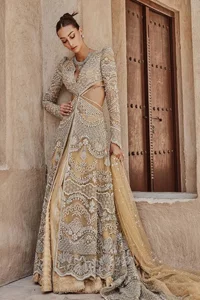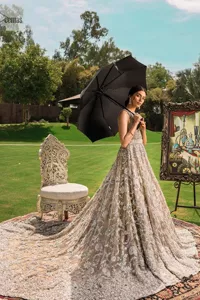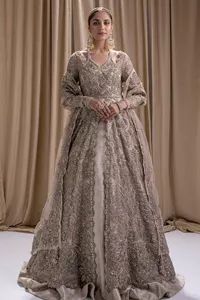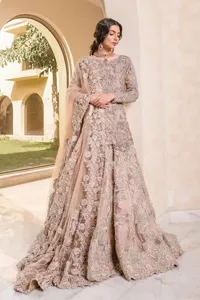
The Visual Power of the Hand-Embellished Zardozi Bodice

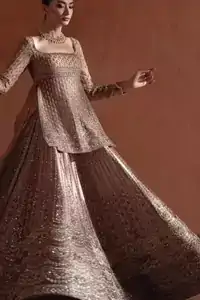
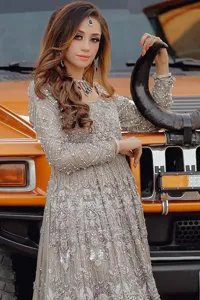
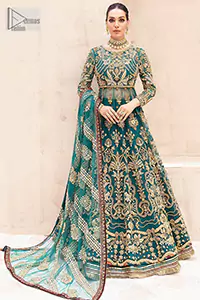
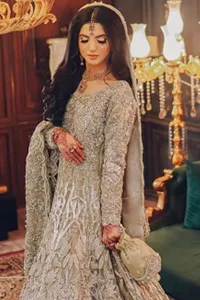
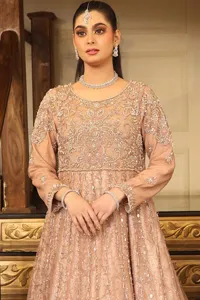
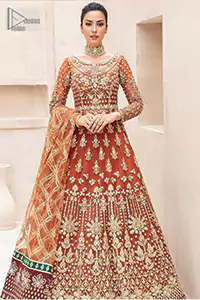
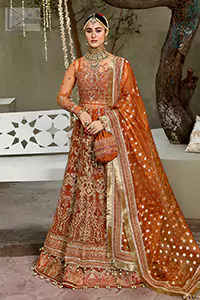
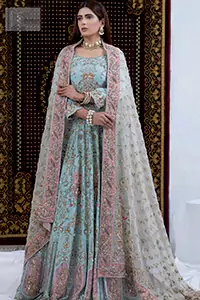
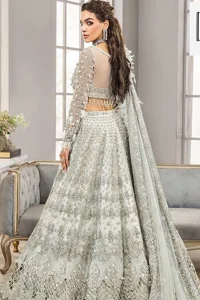
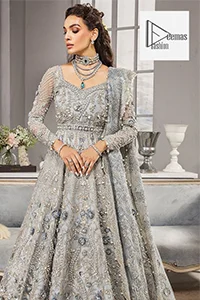
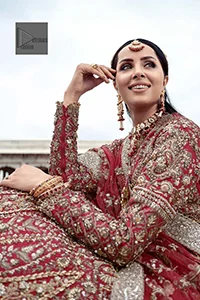
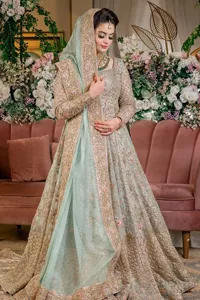
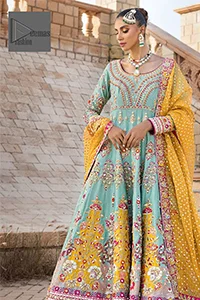
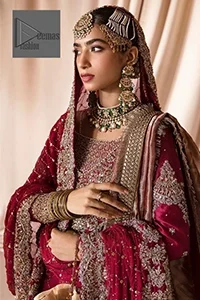
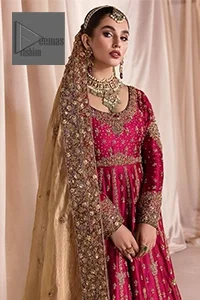
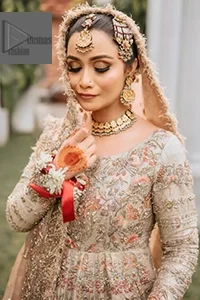
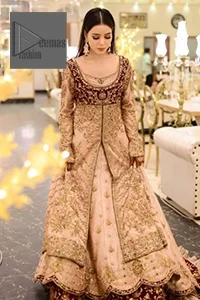
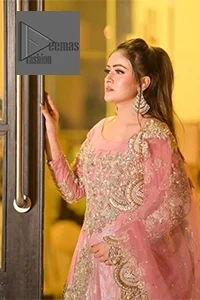
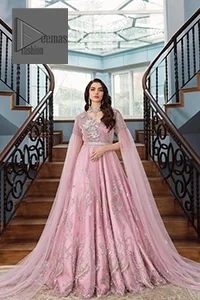
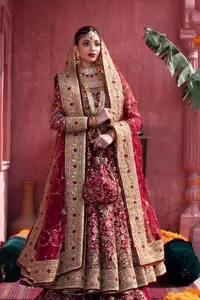
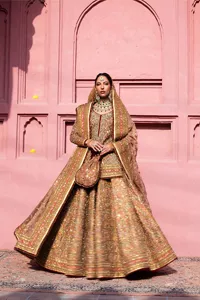
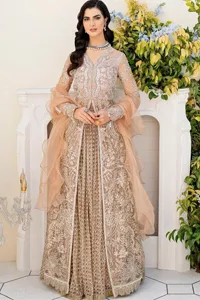
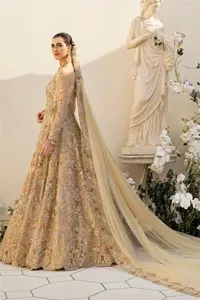
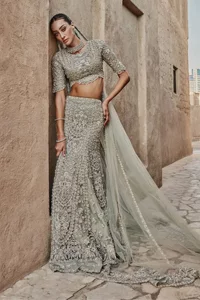
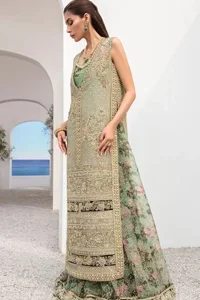
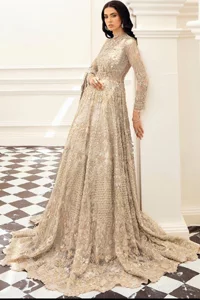
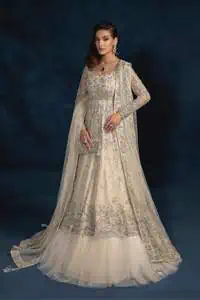
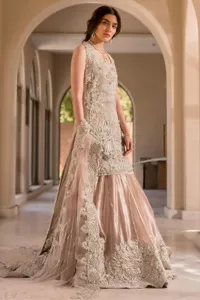
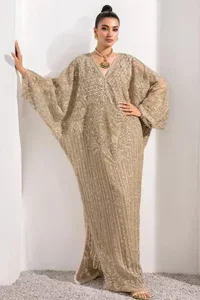
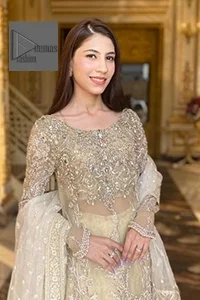
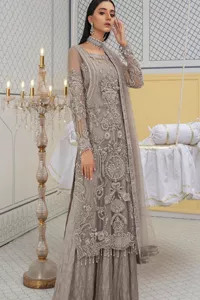
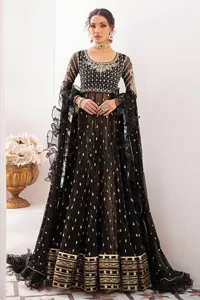
In the lexicon of South Asian couture, the silhouette is not merely a shape; it is a statement of intent. When selecting a Bridal Lehenga for a high-stakes Nikkah, Barat Reception, the decision to opt for a Hand-Embellished Zardozi Bodice is not just aesthetic, it is foundational. The bodice serves as the visual anchor of the entire ensemble. While the lehenga skirt provides volume and drama, the bodice is the epicenter of engagement; it is what guests see when you are seated, it is what frames your face in portraits, and it is the structural component that dictates your carriage. A heavily encrusted bodice creates a distinct “inverted triangle” visual hierarchy. By concentrating the density of the gold work and crystals on the torso, we draw the eye upward, celebrating the bride’s presence rather than just the fabric. Unlike lighter printed fabrics or machine embroidery, a true hand-embellished Zardozi bodice possesses a gravitational integrity. It does not fold; it sculpts.

Khala’s Verdict

“Never underestimate the discipline of heavy embroidery. When a bride wears a Bridal Lehenga with a structured, 2-pound Hand-Embellished Zardozi Bodice, she physically cannot slouch. The weight of the work acts like a regal corset, forcing the shoulders back and the chin up. You don’t just wear the embroidery; the embroidery demands that you sit like a queen.”

To achieve perfection, one must adhere to the architectural law of bridal fashion. If the skirt is voluminous and flowing, the top must be rigid and contained.
The Golden Rule of the Bridal Lehenga is simple: Balance the kinetic flow of the skirt with the static, majestic weight of a Hand-Embellished Zardozi Bodice to create a silhouette that commands the room.

Hand-Embellished Zardozi Bodice vs. Banquet Hall Lighting

A common oversight in bridal shopping is ignoring the physics of light. You are not wearing your Bridal Lehenga in natural daylight; you are wearing it in a Banquet Hall. The interaction between the photon streams of chandeliers or stage spotlights and the metallic surface of the Hand-Embellished Zardozi Bodice can make or break your photography.

How does banquet lighting affect the embroidery sheen?

This is a matter of reflection versus absorption. In a controlled Banquet Hall environment, lighting is often harsh, directional, and multi-sourced (warm yellow tungsten mixed with cool white LED strobes). A Hand-Embellished Zardozi Bodice composed entirely of high-shine silver sequins can act as a mirror, creating “hot spots” in photographs where the chest area becomes a washed-out white blur due to flash bounce-back.

For this specific venue type, the engineering of the bodice requires “Antique” or “Matte Gold” Kora and Dabka work. By using materials that have a slightly oxidized finish, the bodice absorbs the high-intensity light rather than deflecting it. This results in a rich, deep texture visible to the camera lens, rather than a glare. The cut-glass stones (beads) interspersed within the Zardozi should be faceted to catch the moving lights during your entrance, creating a sparkle that dances, while the metallic threads remain grounded and regal. This precise balance ensures that the Bridal Lehenga looks three-dimensional and texturally complex, regardless of the lighting technician’s setup.


Living with a Hand-Embellished Zardozi Bodice

We must be transparent about the sensory experience. Wearing a Bridal Lehenga topped with a fully encrusted Hand-Embellished Zardozi Bodice is a kinetic commitment. We are talking about approximately 1.5kg to 2.5kg of metal wire, glass beads, and setting glue localized entirely on the torso.

When you put it on, the sensation is one of being encased. The bodice does not drape; it structures. It compresses the torso slightly, providing a feeling of security and firmness. As you move, the bodice does not ripple like silk; it moves as a singular, solid unit, anchored by its own weight. This rigidity is desirable for the visual silhouette, but it presents a specific challenge regarding skin contact.

Solving the Friction Equation

The primary pain point for brides wearing heavy work is underarm friction and metal-thread scratching. The ends of Zardozi wire are essentially cut metal coils; if they protrude through the inner fabric, they act like sandpaper against the skin.

The Deemas Solution: We treat the Hand-Embellished Zardozi Bodice as an independent engineering unit. We utilize a ‘Malai Grip’ lining specifically under the bodice. This fabric is dense yet buttery smooth. More importantly, we employ a “floating lining” technique where the embroidery backing is sealed behind a canvas layer before the lining is attached. This creates a double-barrier between the abrasive Zardozi wire knots and your skin. The Bridal Lehenga allows you to dance and embrace guests without the stinging distraction of metal chaffing.


The Internal Anatomy of the Hand-Embellished Zardozi Bodice

A luxury Bridal Lehenga is defined not by how it looks on a hanger, but by how it is constructed from the inside out. The Hand-Embellished Zardozi Bodice undergoes a rigorous 14-step assembly process. Here is the audit of the invisible layers that justify the investment:

  • Canvas Fusing: We apply a heavy-grammage canvas interfacing fused to the raw silk base. This prevents the heavy zardozi from puckering or sagging the fabric over time.
  • The Locking Stitch: Every third beat of the Dabka (coiled wire) is secured with a double-locking stitch to ensure that if one thread snaps, the entire line of embroidery does not unravel.
  • Rash-Guard Piping: The neckline and armholes are finished with soft velvet or silk piping that rolls over the edge, ensuring no sequins touch the sensitive skin of the neck.
  • Weight Distribution Panels: The pattern is drafted so that the heaviest stones are centered on the structural seams (princess cut), utilizing the seam strength to hold the weight rather than the delicate fabric center.
  • Concealed Side-Zip Reinforcement: The zipper on the Hand-Embellished Zardozi Bodice is reinforced with hook-and-eye closures at the stress points (top and waist) to prevent zipper bursts when sitting.
  • Sweat-Resistant Padding: Built-in cups are lined with a moisture-wicking layer to protect the exterior silk from perspiration stains during the reception.
  • Margin Allowance: We include 2 inches of fabric allowance inside the bodice, preserved under the lining, to allow for future size adjustments without destroying the embroidery continuity.
  • Anchor Threads: Heavy stones are not just glued; they are tacked down with nylon invisible thread, which has a higher tensile strength than cotton thread.
  • Symmetry Mapping: The left and right panels of the bodice are mirrored using digital stencils before hand-work begins to ensure millimeter-perfect symmetry on the Bridal Lehenga.
  • The ‘Sit’ Test: Every bodice undergoes a flex test to ensure the bottom hem does not dig into the hips when the bride is seated.

Performance Matrix: Choosing Your Intensity

Not every Bridal Lehenga requires the same density of work. Depending on your stamina and the specific requirements of the event, you can choose the intensity of the Hand-Embellished Zardozi Bodice.

Bodice Style Weight Class Comfort Rating (Hours) Best Body Type Match
Fully Encrusted (Jaal) Heavy (2.0kg+) 4-5 Hours Petite / Narrow Frames (Adds volume)
Panel & Border Work Medium (1.2kg) 6-8 Hours Curvy / Hourglass (Elongates torso)
Motif Spray (Butti) Light (0.8kg) 10+ Hours Broad Shoulders (Reduces visual bulk)
Deep Neck/Backless Medium-Heavy 5-6 Hours Pear Shape (Draws eye upward)

Who Should Wear a Fully Embellished Bodice?

The geometry of a Bridal Lehenga is transformative, but the Hand-Embellished Zardozi Bodice must be mapped to your specific body architecture. The interplay of light, texture, and volume can alter your perceived proportions.

Will a fully embellished bodice make me look broader?

This is a valid concern. Zardozi, by nature, adds thickness to the fabric. If the embroidery is dense and uniform, it can visually expand the surface area of the torso. However, this is not a reason to avoid it; it is a reason to be strategic with the pattern of the embroidery.

Khala’s Advice: “Be honest with the mirror. If you are Apple-shaped or have a heavy bust, a solid block of gold embroidery on the chest will add bulk. You do not need less embroidery; you need directional embroidery. Opt for a Bridal Lehenga where the bodice features vertical panels or a ‘V’ formation in the Zardozi work. This slices the width and guides the eye up and down, rather than side to side. Conversely, if you are pear-shaped with narrower shoulders, the fully encrusted bodice is your best friend—it balances your hips against your shoulders.”


Post-Wedding Reuse: The Heirloom Strategy

The beauty of a two-piece Bridal Lehenga lies in its modularity. The Hand-Embellished Zardozi Bodice is the most valuable component of your trousseau. Long after the Barat is over, this piece remains a versatile asset in your wardrobe.

Because the bodice is constructed with such high structural integrity, it can be decoupled from the heavy bridal skirt. For a close friend’s wedding or a future family Eid dinner, pair this heavy bodice with a plain, solid-colored chiffon saree or a lightweight jamawar skirt. The heavy embroidery on top instantly elevates the simpler bottom, creating a completely new outfit that retains the sentimental value of your big day without the logistical weight of the full bridal train.

To explore how we construct these timeless pieces, view our guide on the customization process of your heavy bodice Lehenga for Nikah to see how we tailor the weight and design to your needs.