
Custom Tailored Wedding Lehengas British Brides
A Birmingham wedding hall, Marble floors. A lehenga settling into its weight. A lehenga is not worn. It is carried, commanded, and remembered. For centuries, the lehenga has defined bridal authority. Its volume signalled status. Its embroidery spoke of region and lineage. Its modular construction allowed repair, reuse, and inheritance. This was never decoration. It was structure with meaning. At Deemas Fashion, Nikah and wedding lehengas are designed with this heritage intact. For Manchester venues with grand architecture and long processions, the skirt must hold form while allowing movement. For Birmingham ceremonies rooted in tradition, the silhouette must feel ceremonial without exhausting the bride. When the occasion calls for understated elegance rather than grand spectacle, many discerning brides are drawn to select their lightweight and elegant Nikah wear before finalizing a more opulent wedding lehenga.
-
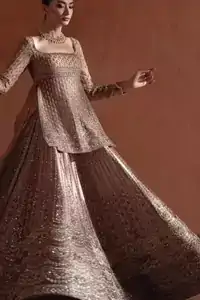
Golden Short Shirt Flared Lehenga Sheer Dupatta
Sale! Original price was: £ 2,200.£ 1,320Current price is: £ 1,320. -
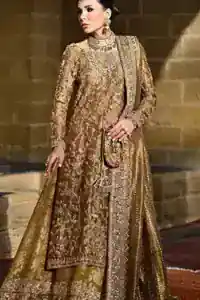
Bronze Gold Long Shirt Farshi Lehenga
Sale! Original price was: £ 2,250.£ 1,350Current price is: £ 1,350. -
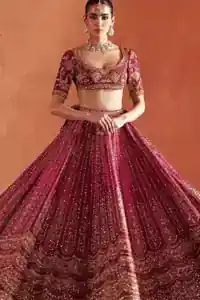
Crimson Short Blouse Lehenga Scalloped Dupatta
Sale! Original price was: £ 2,250.£ 1,350Current price is: £ 1,350. -
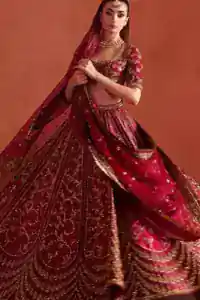
Deep Fuchsia Lehenga Blouse Dupatta
Sale! Original price was: £ 2,150.£ 1,290Current price is: £ 1,290. -
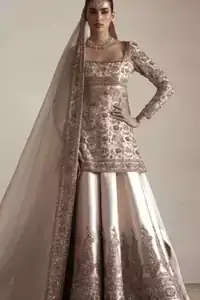
Ivory Short Shirt Lehenga Dupatta
Sale! Original price was: £ 2,250.£ 1,350Current price is: £ 1,350. -
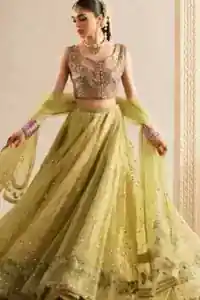
Pink Blouse Lime Green Lehenga Dupatta
Sale! Original price was: £ 1,500.£ 900Current price is: £ 900. -
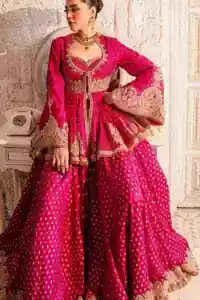
Raspberry Front Open Peplum Lehenga Dupatta
Sale! Original price was: £ 1,550.£ 930Current price is: £ 930. -
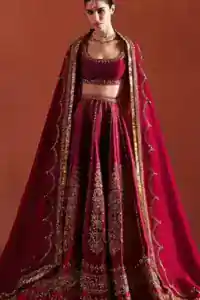
Ruby Red Flared Lehenga Blouse Dupatta
Sale! Original price was: £ 2,050.£ 1,230Current price is: £ 1,230. -
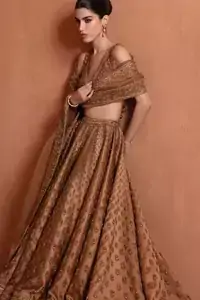
Bronze Blouse Back Train Lehenga
Sale! Original price was: £ 2,250.£ 1,350Current price is: £ 1,350. -
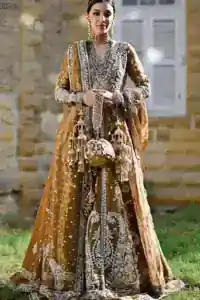
Copper Front Open Maxi Lehenga Dupatta
Sale! Original price was: £ 1,700.£ 1,020Current price is: £ 1,020. -
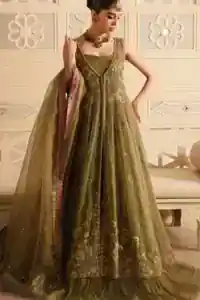
Olive Green Front Open Gown Crushed Lehenga
Sale! Original price was: £ 1,500.£ 900Current price is: £ 900. -

Oyster Pink Blouse Back Train Lehenga Veil
Sale! Original price was: £ 1,400.£ 840Current price is: £ 840. -
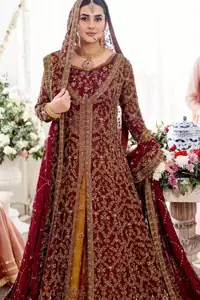
Maroon Front Open Pishwas Mustard Farshi Lehenga
Sale! Original price was: £ 2,250.£ 1,350Current price is: £ 1,350. -
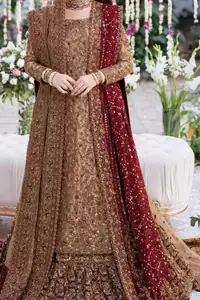
Copper Long Shirt Farshi Lehenga Maroon Dupatta
Sale! Original price was: £ 2,300.£ 1,380Current price is: £ 1,380. -
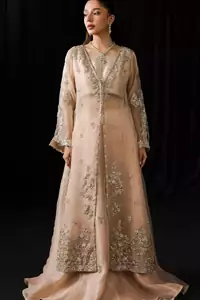
Pale Pink Front Open Jacket Lehenga
Sale! Original price was: £ 820.£ 492Current price is: £ 492. -
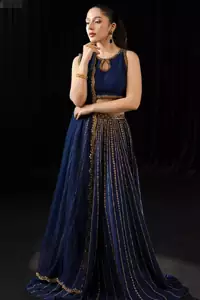
Navy Blue Lehenga Blouse Dupatta
Sale! Original price was: £ 1,200.£ 720Current price is: £ 720. -
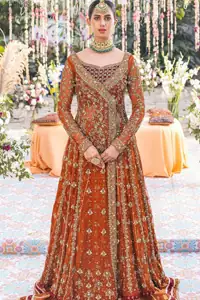
Rust Angrakha Farshi Lehenga Red Dupatta
Sale! Original price was: £ 2,100.£ 1,260Current price is: £ 1,260. -
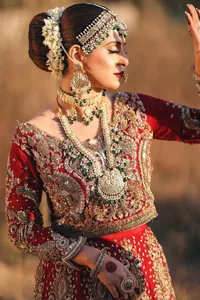
Red Blouse Flared Lehenga Scalloped Dupatta
Sale! Original price was: £ 2,350.£ 1,410Current price is: £ 1,410. -
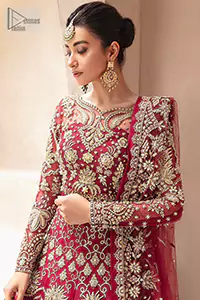
Red Blouse Wide Flare Lehenga Dupatta
Sale! Original price was: £ 2,350.£ 1,410Current price is: £ 1,410. -
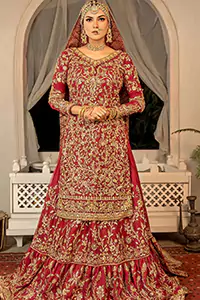
Red Long Shirt Back Train Farshi Lehenga
Sale! Original price was: £ 2,350.£ 1,410Current price is: £ 1,410. -
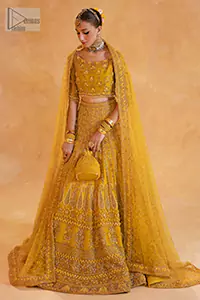
Mustard Lehenga Blouse Dupatta for Mehndi Bride
Sale! Original price was: £ 2,250.£ 1,350Current price is: £ 1,350. -
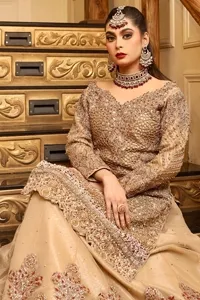
Beige Scalloped Shirt Can Can Lehenga
Sale! Original price was: £ 1,850.£ 1,110Current price is: £ 1,110. -
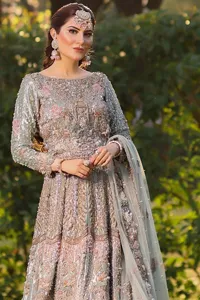
Mint Green Lehenga Blouse Dupatta
Sale! Original price was: £ 1,650.£ 990Current price is: £ 990. -
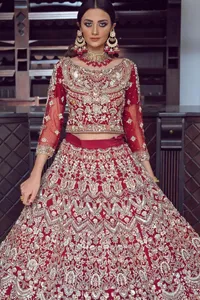
Maroon Wide Flared Lehenga Blouse
Sale! Original price was: £ 1,850.£ 1,110Current price is: £ 1,110. -
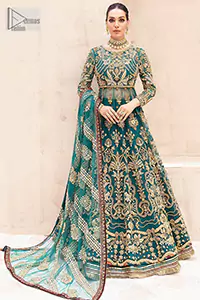
Teal Maxi Inner Lehenga Dupatta
Sale! Original price was: £ 2,000.£ 1,200Current price is: £ 1,200. -
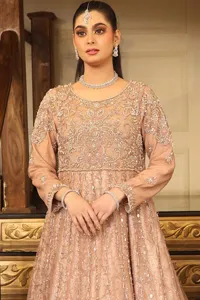
Fawn Flared Scalloped Maxi Can Can Lehenga
Sale! Original price was: £ 1,820.£ 1,092Current price is: £ 1,092. -
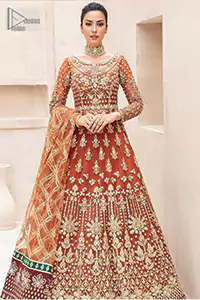
Rust Full Length Pishwas Lehenga Mehndi Bride
Sale! Original price was: £ 1,900.£ 1,140Current price is: £ 1,140. -
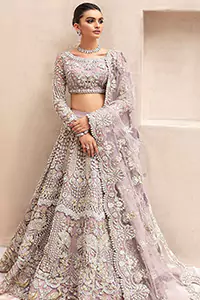
Pastel Pink Lehenga Short Blouse Dupatta for Nikah Bride
Sale! Original price was: £ 2,250.£ 1,350Current price is: £ 1,350. -
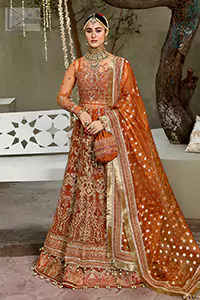
Rust Wide Flare Maxi – Lehenga for Mehndi Bride
Sale! Original price was: £ 1,900.£ 1,140Current price is: £ 1,140. -
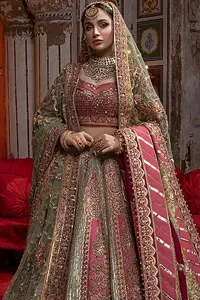
Pink Blouse Pistachio Green Lehenga Dupatta
Sale! Original price was: £ 2,450.£ 1,470Current price is: £ 1,470. -
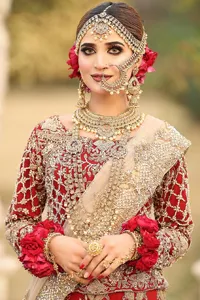
Red Can Can Lehenga Blouse Fawn Dupatta
Sale! Original price was: £ 2,250.£ 1,350Current price is: £ 1,350. -
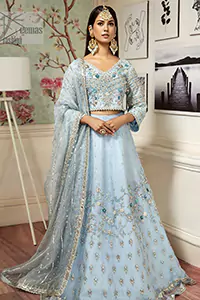
Sky Blue Blouse Lehenga Dupatta for Nikah Bride
Sale! Original price was: £ 1,400.£ 840Current price is: £ 840. -
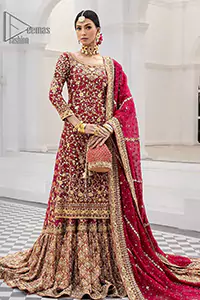
Deep Red Long Shirt Farshi Lehenga for Reception
Sale! Original price was: £ 2,350.£ 1,410Current price is: £ 1,410. -
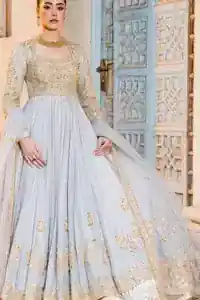
Ice Blue Pishwas Lehenga Dupatta
Sale! Original price was: £ 1,800.£ 1,080Current price is: £ 1,080. -
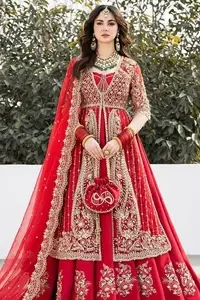
Red Front Open Shirt Inner Blouse Back Trail Lehenga
Sale! Original price was: £ 2,250.£ 1,350Current price is: £ 1,350. -
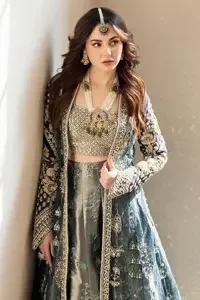
Teal Front Open Gown Blouse Lehenga
Sale! Original price was: £ 1,920.£ 1,152Current price is: £ 1,152. -
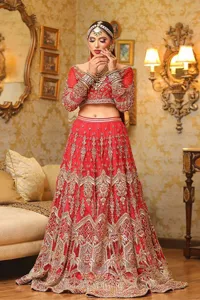
Bright Red Blouse – Flared Lehenga – Heavy Dupatta Border
Sale! Original price was: £ 2,250.£ 1,350Current price is: £ 1,350. -
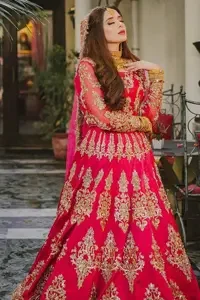
Red Golden Embroidered Lehenga Blouse
Sale! Original price was: £ 2,300.£ 1,380Current price is: £ 1,380. -
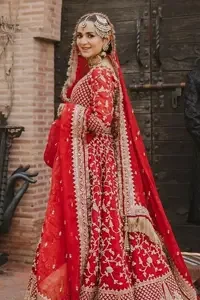
Red Traditional Lehenga Blouse Dupatta
Sale! Original price was: £ 2,400.£ 1,440Current price is: £ 1,440. -
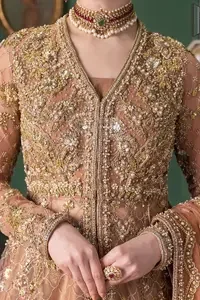
Dark Salmon Pink Front Open Jacket Tissue Lehenga
Sale! Original price was: £ 2,150.£ 1,290Current price is: £ 1,290.
What defines a modern bridal lehenga in 2026?
Adaptability :- Modern lehengas move away from single-use thinking. Modular skirts, detachable over skirts, and interchangeable blouses allow multiple looks from one garment. This addresses both cost anxiety and wear ability.How do you keep lehengas lightweight without losing form?
By controlling materials :- Silk blends replace heavy velvets. Embroidery is distributed evenly. Structural linings support shape without adding mass. A lehenga should hug briefly, then release.Are high-tech fabrics actually practical for bridal wear?
When used selectively:- Temperature responsive fabrics regulate heat. Hydrophobic finishes protect against spills. AR enabled fittings allow precise customization before cutting. Technology serves comfort. Not spectacle.Do fusion lehengas risk cultural appropriation?
Only when intention is absent:- We approach fusion through respect. Victorian volume meets Ottoman geometry. Traditional motifs are preserved even as silhouettes evolve. Appreciation requires understanding.How do modern lehengas handle movement and sitting?
Through kinetic design :- Layered skirts respond to motion. Panels separate slightly when seated, then return to form when standing. Sound and light elements, when used, remain subtle. Movement should feel natural.What are the top lehenga anxieties you hear? Three dominate.
Will it feel too heavy? Not under 9 kg total weight. Will it shorten my frame? Not with correct paneling. Will I wear it again? Yes. When modular.Is a lehenga suitable for Nikah ceremonies? Yes. With restraint.
Lighter skirts, minimal borders, and controlled dupatta styling allow lehengas to sit appropriately at Nikah events. Brides often reference our collection of Bridal Nikah Dresses to decide when a lehenga is appropriate versus a more composed silhouette.Final stylist note
The modern lehenga is a strategic choice. It balances ceremony with future use. Presence with comfort. Tradition with clarity. At Deemas Fashion, every lehenga order secures production time, not inventory. If your date is fixed, your decision should be too.Showing 1–40 of 527 resultsSorted by latest