
The Engineering Shararas for Mehndi
Khala’s Verdict. The sharara is not a shy silhouette. For a Mehndi. It dictates a posture of open confidence. The wide, flowing pants and fitted knees force a particular gait. A measured, graceful step that comes from the hip. Not the knee. This is why it is perfect for the ceremonial actions of a Mehndi. Sitting with your legs folded to the side. The flare creates a beautiful pool of fabric. Standing to greet guests. The pants fall back into a clean, aristocratic line. It teaches you to move with intention.
The Golden Rule for a Mehndi is this: the volume of your sharara must be in proportion to your height and the scale of the venue. Too much flare in a confined space is clutter. Too little in a grand ball room is insignificance.
Is a sharara the same as a lehenga or palazzo?
No. Absolutely not. This is a critical technical distinction. A lehenga is a full skirt attached at the waist. A palazzo is a wide leg trouser cut from a single, flowing pattern. A sharara is a specific hybrid. It is a trouser cut with a fitted knee that then explodes into a flare from the mid calf down. This engineering has direct consequences in a Liverpool ball room. The fitted knee prevents the fabric from catching under your heels or the heels of others on a crowded, potentially slippery dance floor. A lehenga skirt can twist and wrap around the legs. A palazzo can drag and trip you. The sharara’s construction offers controlled movement. The fabric weight is also pivotal. A ball room floor is often polished wood or marble. A heavy silk sharara will have too much drag. A lightweight Net has the correct kinetic recoil. It flares and falls back neatly with each step. Temperature wise. Liverpool venues can be draughty yet become humid when full. Net provides breathability where heavy velvets or brocades would suffocate.
The movement of a Net sharara is its defining drama. During the Mehndi ceremony. As you sway to music or walk to greet guests. The Net should flare out with a soft, whispering sound. Then collapse back gently against the legs. It should not drag. It should not stand away from the body stiffly. The key pain point many brides face is confusion between a sharara and a gharara. A gharara is distinct. It is shorter in length. Often ankle length. And features a much more pronounced, gathered flare from above the knee. Not the calf. It is a more traditional, vintage silhouette. The gharara can often be heavier and more restrictive. The Deemas construction solves the movement issue by reinforcing the flare seam with a hidden Bukram (horsehair) braid of precise width. This supports the Net to sway beautifully without ever losing its shape or becoming tangled. The hand embroidery is anchored with a blanket stitch on the reverse of the Net. This prevents the weight of the sequins and threads from tearing the delicate fabric during vigorous movement.
The Craftsmanship
- Net Gauge: We use a 4mm hexagonal hole Net with a 120 denier thread count. This provides opacity for lining while maintaining ethereal drape.
- Primary Lining: 22 mm Grip Silk. Not Atal. Grip Silk is a fine, matte silk blend that clings gently to the skin without static. Preventing the sharara from sliding and eliminating itchiness.
- Structural Lining: A secondary layer of cotton voile between the Net and embroidery. This acts as a canvas. Distributing the weight of hand embroidery across a wider area to prevent pull and tear.
- Hem Architecture: A 2 inch wide, flexible Bukram (horsehair braid) is hand stitched into the hem of the flare. This invisible support gives the flare its memory and bounce.
- Seam Engineering: All flare seams are French seamed. Then finished with a micro stitch to prevent fraying under the stress of movement.
- Waistband Core: The waistband contains a inner core of non stretch cotton twill. This prevents rolling or curling after hours of wear and sitting.
- Zardozi Anchoring: Each heavy metal thread (Kalabattu) in the Hand Embroidery is knotted individually on the reverse side. Not run across the back. This allows each motif to move independently with the fabric.
- Hook & Eye System: We use a three point heavy duty hook and eye closure on the choli. Reinforced with a parallel set of internal safety snaps. This prevents any sudden failure.
- Edge Binding: All internal edges are bound with silk bias tape. Not merely overlocked. This eliminates chafing and adds durability.
- Vent Construction: The side vents of the sharara are lined with a matching solid chiffon. This prevents the Net from catching on footwear or jewellery.
- Thread Consistency: Embroidery is done with Japanese silk threads for colour fastness. And all construction stitching uses a polyester core spun thread for tensile strength.
- Weight Mapping: The placement of embroidery motifs is mapped digitally first to ensure balance. Heavier work is concentrated on the choli and upper pants. Lighter work on the flare to aid movement.
Module 5: Performance Matrix
| Fabric Type | Weight Class | Ball Room Risk Factor | Drape Character |
|---|---|---|---|
| Net (Ours) | Light | Low | Fluid, Airy |
| Heavy Silk Velvet | Heavy | High (Overheats, Drags) | Stiff, Bulky |
| Chiffon | Light | Medium (Can cling, static) | Fluid, Soft |
| Brocade | Heavy | High (Restrictive, Hot) | Stiff, Structured |
The matrix shows why Net is the superior choice. Its low weight and risk factor coupled with fluid drape make it engineered for the dynamics of a large, active ball room event. It manages temperature and movement where others fail.
Is a sharara considered formal enough for a Walima or Nikah ceremony?
Yes. But with a critical caveat. The formality is dictated by the density of the Hand Embroidery and the richness of the Net. A lightly embroidered Net sharara is perfect for a Mehndi. For a Nikah or Walima. You would select a design with heavier Zardozi. Perhaps with crystal overlay. And a richer colour palette. The silhouette itself is inherently formal and regal.
Khala’s Advice. Let us be blunt. Your body frame dictates the sharara’s proportions.
Pear Shape: Focus volume in the flare. Not the hips. Use a longer choli to elongate the torso. Avoid embroidery on the hip area.
Apple Shape: Choose a high waistline on the sharara pants. This creates a defined waist under the choli. Opt for a vertical alignment of embroidery on the choli.
Hourglass: You can carry most volumes. Emphasise the waist with a fitted choli and a defined waistband. Balance the flare proportionally to your shoulders.
Petite: Avoid a double layer flare. It swallows the frame. Opt for a single layer Net sharara with a medium flare to elongate the torso. The ‘Fall’ (length from waist to floor) must be exact. Any pooling will shorten you.
Tall: You need volume to match your frame. A double flare or a heavier border on the hem will ground the silhouette beautifully. You can carry a longer ‘Fall’ with elegance. The ‘Fall’ is everything. For every inch of height difference. We adjust the flare’s starting point and width. A 5’2″ bride and a 5’9″ bride in the same design will have completely different pattern pieces. Not just shortened or lengthened.
A well crafted Net sharara is not a one event garment. The investment lies in its future utility. After the Mehndi. The piece can be transformed. The heavy embroidered choli can be paired with a simple silk saree or palazzo for a post wedding dinner. The sharara pants themselves. If the embroidery is concentrated on the hem. Can be professionally cut and finished at the ankle to create a stunning, unique pair of evening trousers. This is the mark of true couture. It is a garment that evolves with you. For your Mehndi in Liverpool. It offers the perfect blend of tradition and kinetic comfort. For your future events. It becomes a versatile archive piece. To see how our Hand Embroidery designs transition seamlessly to more formal ceremonies. explore our collection of best for Mehndi and Nikah.
-
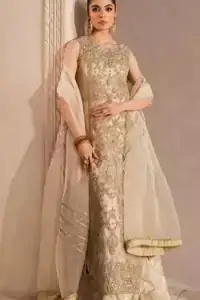
Ivory Side Slits Long Shirt Sharara Dupatta
Sale! Original price was: £ 1,200.£ 720Current price is: £ 720. -
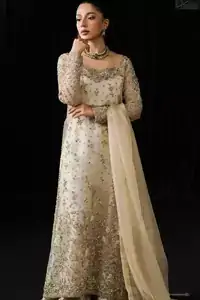
Ivory Long Shirt Sharara Dupatta
Sale! Original price was: £ 1,250.£ 750Current price is: £ 750. -
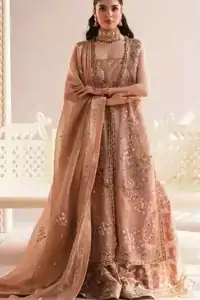
Peach Pink Front Open Jacket Sharara Dupatta
Sale! Original price was: £ 2,250.£ 1,350Current price is: £ 1,350. -
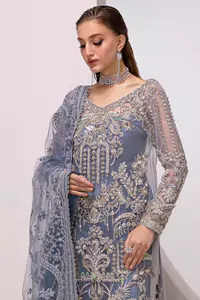
Blue Shirt Dupatta Sharara for Nikah
Sale! Original price was: £ 1,280.£ 768Current price is: £ 768. -

Salmon Pink Tissue Sharara Shirt Net Dupatta
Sale! Original price was: £ 1,900.£ 1,140Current price is: £ 1,140. -
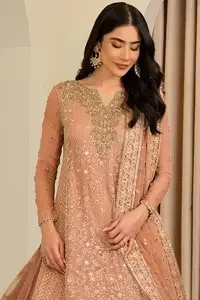
Salmon Pink Shirt Sharara Dupatta for Nikah
Sale! Original price was: £ 2,050.£ 1,230Current price is: £ 1,230. -
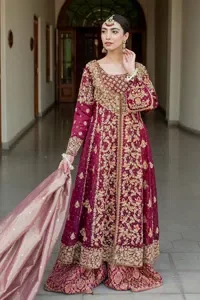
Magenta Front Open Frock – Banarsi Jamawar Sharara
Sale! Original price was: £ 2,050.£ 1,230Current price is: £ 1,230. -
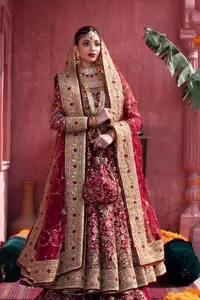
Deep Red Frock – Fish Cut Sharara – Dupatta
Sale! Original price was: £ 2,250.£ 1,350Current price is: £ 1,350. -
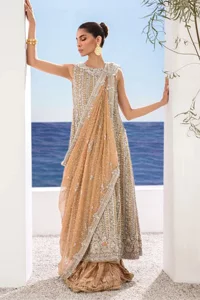
Light Orange Long Shirt – Crushed Sharara – Dupatta
Sale! Original price was: £ 1,150.£ 690Current price is: £ 690. -
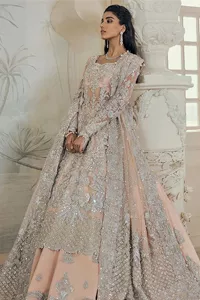
Light Orange Scalloped Shirt – Flare Sharara – Dupatta
Sale! Original price was: £ 2,250.£ 1,350Current price is: £ 1,350. -
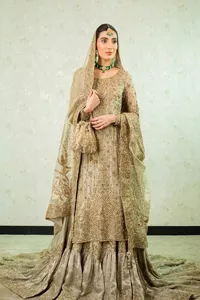
Pistachio Green Shirt – Sharara – Dupatta
Sale! Original price was: £ 2,350.£ 1,410Current price is: £ 1,410. -
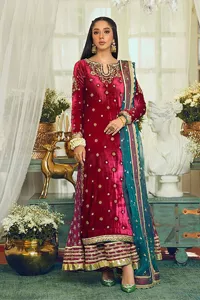
Deep Crimson Long Shirt – Sharara – Green Dupatta
Sale! Original price was: £ 950.£ 570Current price is: £ 570. -
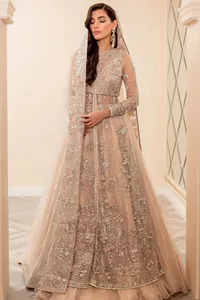
Peach Front Open Shirt – Sharara n Dupatta
Sale! Original price was: £ 1,950.£ 1,170Current price is: £ 1,170. -
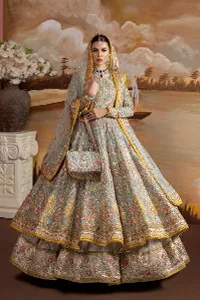
Aqua Blue flared Anarkali – Sharara n Dupatta
Sale! Original price was: £ 2,400.£ 1,440Current price is: £ 1,440. -
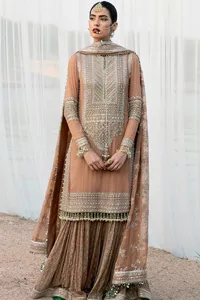
Soft Brown Short Shirt – Sharara n Dupatta
Sale! Original price was: £ 1,950.£ 1,170Current price is: £ 1,170. -
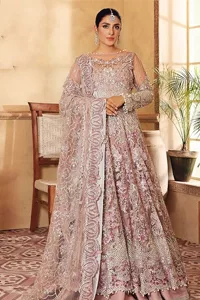
Tea Pink Scalloped Maxi – Sharara n Dupatta
Sale! Original price was: £ 2,250.£ 1,350Current price is: £ 1,350. -
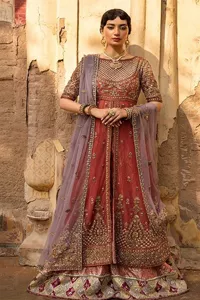
Coral Front Open Maxi – Brocade Sharara n Duppata
Sale! Original price was: £ 1,700.£ 1,020Current price is: £ 1,020. -
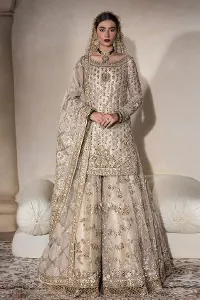
Ivory Short Shirt – Scalloped Sharara n Duppata
Sale! Original price was: £ 1,950.£ 1,170Current price is: £ 1,170. -
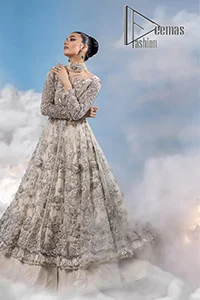
Silver Frill Maxi – Sharara n Dupatta
Sale! Original price was: £ 2,100.£ 1,260Current price is: £ 1,260. -
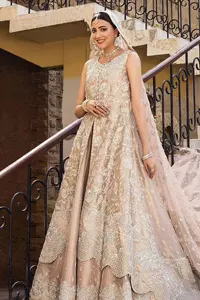
Fawn Front Open Scalloped Maxi – Sharara n Duaptta
Sale! Original price was: £ 2,450.£ 1,470Current price is: £ 1,470. -
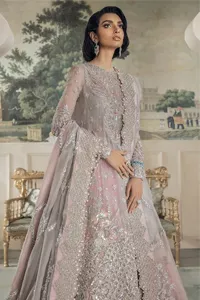
Rose Pink Maxi – Sharara – Scalloped Dupatta
Sale! Original price was: £ 2,335.£ 1,401Current price is: £ 1,401. -
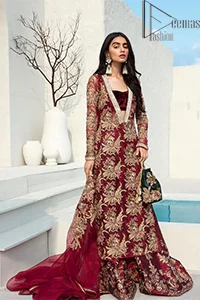
Bright Red Heavy Long Shirt – Sharara n Dupatta
Sale! Original price was: £ 1,950.£ 1,170Current price is: £ 1,170. -
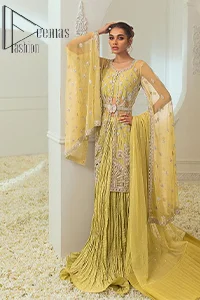
Olive Front Open Shirt – Crushed Sharara – Pleated Dupatta
Sale! Original price was: £ 1,150.£ 690Current price is: £ 690. -
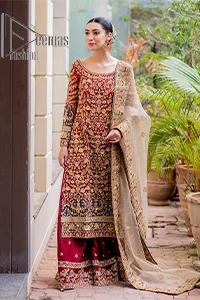
Deep Red Long Shirt – Sharara – Light Fawn Dupatta
Sale! Original price was: £ 1,950.£ 1,170Current price is: £ 1,170. -
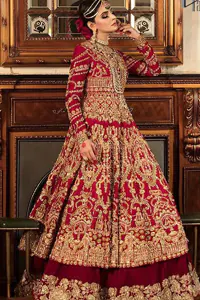
Deep Red Heavy Pishwas – Maroon Sharara
Sale! Original price was: £ 2,250.£ 1,350Current price is: £ 1,350. -
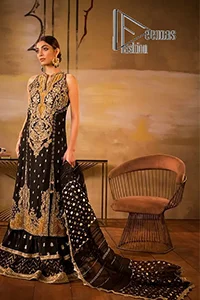
Black Long Shirt – Sharara – Scalloped Dupatta
Sale! Original price was: £ 1,150.£ 690Current price is: £ 690. -
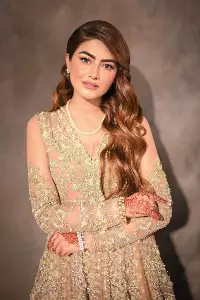
Nude Peach Multiple Panel Frock – Sharara
Sale! Original price was: £ 2,200.£ 1,320Current price is: £ 1,320. -
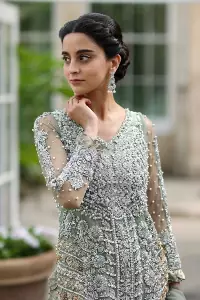
Pastel Green Floor Length Shirt Dupatta – Trousers
Sale! Original price was: £ 1,350.£ 810Current price is: £ 810. -
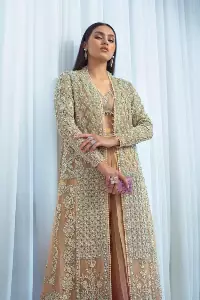
Fawn Long Shirt Blouse – Crushed Two Tone Sharara
Sale! Original price was: £ 850.£ 510Current price is: £ 510. -
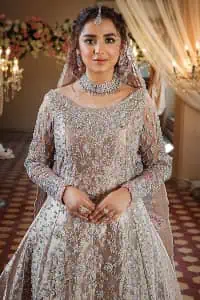
Rose Gold Back Train Maxi – Sharara Dupatta
Sale! Original price was: £ 2,300.£ 1,380Current price is: £ 1,380. -

Lilac Front Open Gown Dupatta – Silver Sharara
Sale! Original price was: £ 2,200.£ 1,320Current price is: £ 1,320. -

Black Jacket Dupatta – Crushed Sharara
Sale! Original price was: £ 640.£ 384Current price is: £ 384. -
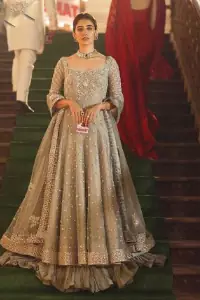
Gray Pishwas Dupatta – Crushed Sharara
Sale! Original price was: £ 2,250.£ 1,350Current price is: £ 1,350. -
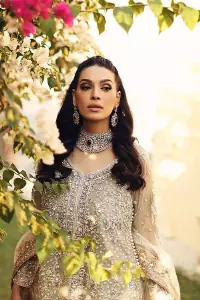
Mint Green Front Open Shirt – Rust Sharara
Sale! Original price was: £ 2,150.£ 1,290Current price is: £ 1,290. -
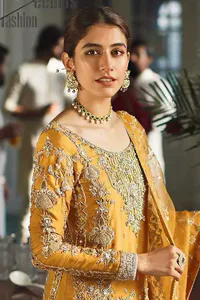
Mustard Short Shirt Sharara as Bridal Mehndi Wear
Sale! Original price was: £ 1,480.£ 888Current price is: £ 888. -
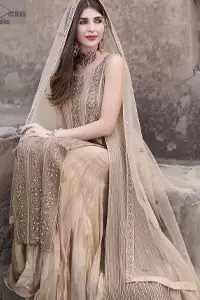
Beige Long Shirt Sharara – Dupatta
Sale! Original price was: £ 1,050.£ 630Current price is: £ 630. -
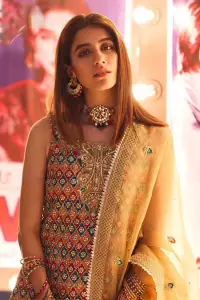
Golden Short Shirt Sharara – Dupatta
Sale! Original price was: £ 1,120.£ 672Current price is: £ 672. -
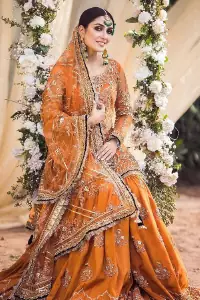
Orange Short Shirt Sharara
Sale! Original price was: £ 1,550.£ 930Current price is: £ 930. -
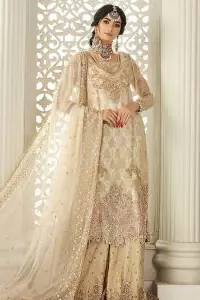
Ivory Long Shirt Sharara – Dupatta
Sale! Original price was: £ 1,950.£ 1,170Current price is: £ 1,170. -
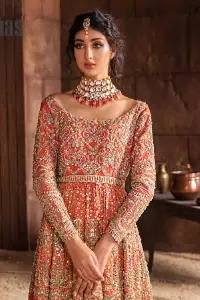
Orange Frock – Back Train Sharara
Sale! Original price was: £ 1,050.£ 630Current price is: £ 630.
Which Bridal Sharara is Trending in 2026?
The Sharara is a three-piece outfit with flared pants for lowers, with plates that start from the knee and end at the ankle giving a very smart and beautiful look. The skirt-like outline below the knee is heavily flared ( also called the trumpet skirt) and resembles the shape of an umbrella. Sharara is often worn to nikah, mehndi and reception parties as well. Deemas Fashion has advanced in providing this outfit to its customers and that too with many different options. We have shararas with Pishwas, long shirts, frocks, maxis, shirts and blouses too. So no matter what you’re looking for to wear on a special occasion, Deemas fashion has all the answers for you. We have intricated the designs with threadwork and other motifs. There is a comparatively higher embroidery for the ones which are entirely reserved for bridal wear. We have our best men at work for all this.Why Wedding Sharara from Deemas Fashion?
That is one reason why customers trust our services more than they do any other. With time, Sharara has been experimented with to come up with contemporary versions of the outfit and Deemas fashion has done the same. We offer you the exact kind of style you are looking for in your dresses. We have shararas with cholis as well. You may not know how to make aloo paratha, but you will surely rock our shararas like a pro. We have shararas with long shirts, frock style shirts and blouse too. We have made it so trendy by designing it in various ways, and the material is so much better. Deemas fashion will make you look gorgeous and the only with their stylish colourful attire of shararas. You can look up to us online.Showing 1–40 of 141 resultsSorted by latest