
Reception & Baraat Dresses for UK Brides
Midday sunlight. Outdoor photographs. Long entrances. Prolonged greetings. The Reception and First Day or Baraat are physically demanding events, not styling exercises. In London and Sheffield weddings, brides often underestimate how much the first outfit must endure. The Baraat or First Day dress is worn during the most active hours of the wedding. Walking, standing, family rituals, temperature changes, and unplanned delays. This is why Baraat dressing has always been about structure before surface.
The Reception, by contrast, is where visual dominance matters more than stamina. Lighting replaces daylight. Movement becomes intentional. Photography becomes continuous. A Reception dress must respond to motion, not resist it. At Deemas Fashion, these two outfits are never designed as aesthetic variations of the same idea. They are engineered separately. Different weight logic. Different embroidery placement. Different silhouettes. For Birmingham ceremonies, where events often start early and extend across venues, Baraat and Nikkah dresses are built with reinforced hems, breathable silk blends, and stable waist structures. Sheffield receptions tend to favour indoor evening settings, where fabric reflection and silhouette clarity outperform sheer embroidery volume.
-
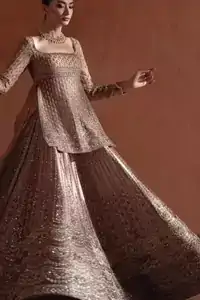
Golden Short Shirt Flared Lehenga Sheer Dupatta
Sale! Original price was: £ 2,200.£ 1,320Current price is: £ 1,320. -
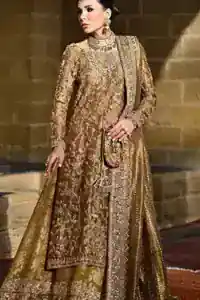
Bronze Gold Long Shirt Farshi Lehenga
Sale! Original price was: £ 2,250.£ 1,350Current price is: £ 1,350. -
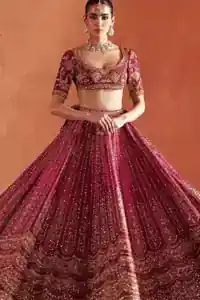
Crimson Short Blouse Lehenga Scalloped Dupatta
Sale! Original price was: £ 2,250.£ 1,350Current price is: £ 1,350. -
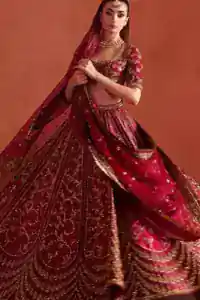
Deep Fuchsia Lehenga Blouse Dupatta
Sale! Original price was: £ 2,150.£ 1,290Current price is: £ 1,290. -
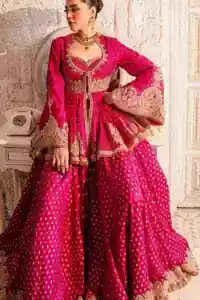
Raspberry Front Open Peplum Lehenga Dupatta
Sale! Original price was: £ 1,550.£ 930Current price is: £ 930. -
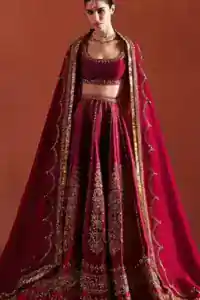
Ruby Red Flared Lehenga Blouse Dupatta
Sale! Original price was: £ 2,050.£ 1,230Current price is: £ 1,230. -
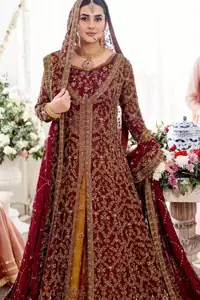
Maroon Front Open Pishwas Mustard Farshi Lehenga
Sale! Original price was: £ 2,250.£ 1,350Current price is: £ 1,350. -
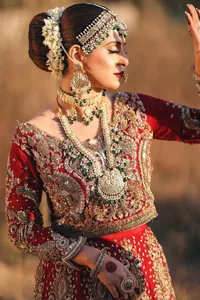
Red Blouse Flared Lehenga Scalloped Dupatta
Sale! Original price was: £ 2,350.£ 1,410Current price is: £ 1,410. -
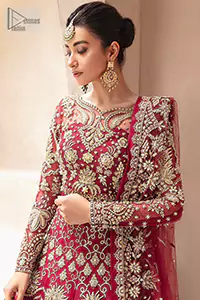
Red Blouse Wide Flare Lehenga Dupatta
Sale! Original price was: £ 2,350.£ 1,410Current price is: £ 1,410. -
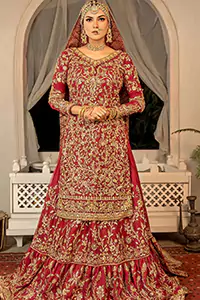
Red Long Shirt Back Train Farshi Lehenga
Sale! Original price was: £ 2,350.£ 1,410Current price is: £ 1,410. -
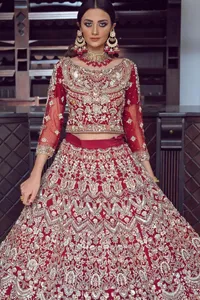
Maroon Wide Flared Lehenga Blouse
Sale! Original price was: £ 1,850.£ 1,110Current price is: £ 1,110. -
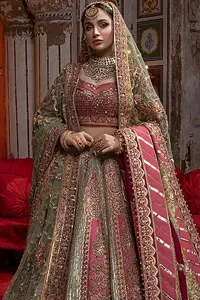
Pink Blouse Pistachio Green Lehenga Dupatta
Sale! Original price was: £ 2,450.£ 1,470Current price is: £ 1,470. -
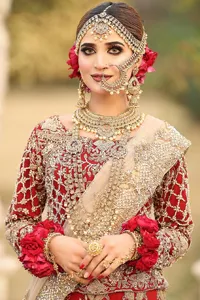
Red Can Can Lehenga Blouse Fawn Dupatta
Sale! Original price was: £ 2,250.£ 1,350Current price is: £ 1,350. -
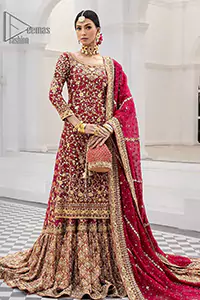
Deep Red Long Shirt Farshi Lehenga for Reception
Sale! Original price was: £ 2,350.£ 1,410Current price is: £ 1,410. -
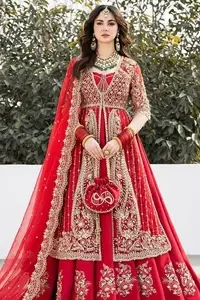
Red Front Open Shirt Inner Blouse Back Trail Lehenga
Sale! Original price was: £ 2,250.£ 1,350Current price is: £ 1,350. -
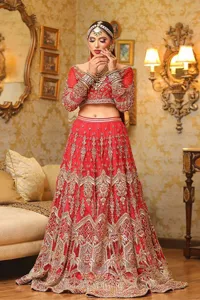
Bright Red Blouse – Flared Lehenga – Heavy Dupatta Border
Sale! Original price was: £ 2,250.£ 1,350Current price is: £ 1,350. -
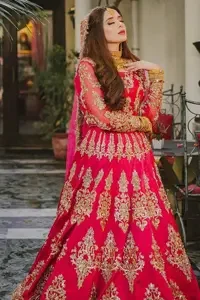
Red Golden Embroidered Lehenga Blouse
Sale! Original price was: £ 2,300.£ 1,380Current price is: £ 1,380. -
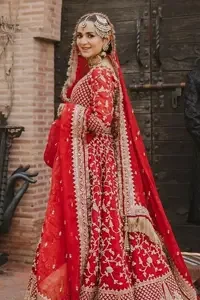
Red Traditional Lehenga Blouse Dupatta
Sale! Original price was: £ 2,400.£ 1,440Current price is: £ 1,440. -
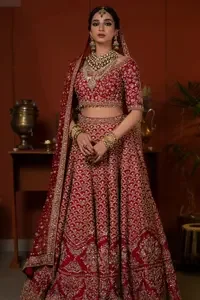
Maroon Traditional South Asian Lehenga Blouse
Sale! Original price was: £ 2,200.£ 1,320Current price is: £ 1,320. -
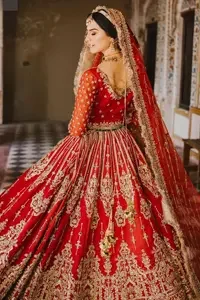
Red Wide Flare Blouse Lehenga for Reception
Sale! Original price was: £ 2,410.£ 1,446Current price is: £ 1,446. -
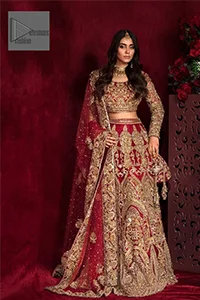
Deep Red Blouse – Heavy Lehenga n Dupatta
Sale! Original price was: £ 2,250.£ 1,350Current price is: £ 1,350. -
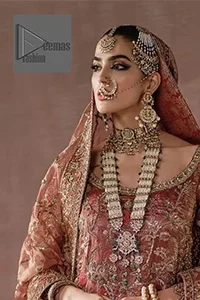
Light Maroon Long Shirt – Farshi Lehenga
Sale! Original price was: £ 2,350.£ 1,410Current price is: £ 1,410. -
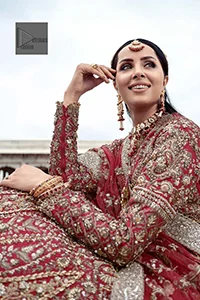
Red Blouse – Can Can Flared Lehenga n Dupatta
Sale! Original price was: £ 2,350.£ 1,410Current price is: £ 1,410. -
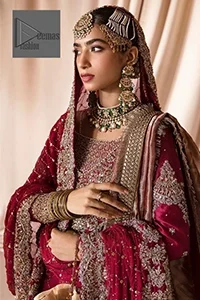
Maroon Shirt – Brocade Lehenga with Frill – Tissue Dupatta
Sale! Original price was: £ 2,110.£ 1,266Current price is: £ 1,266. -
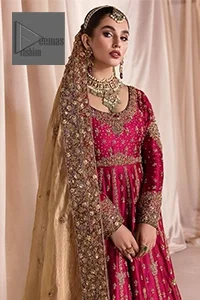
Magenta Anarkali – Back Trail Colourful Lehenga
Sale! Original price was: £ 2,250.£ 1,350Current price is: £ 1,350. -
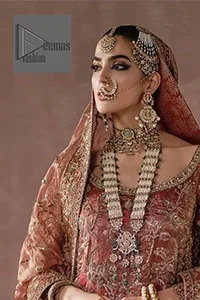
Pale Red Long Shirt – Flared Heavy Lehenga n Dupatta
Sale! Original price was: £ 2,200.£ 1,320Current price is: £ 1,320. -
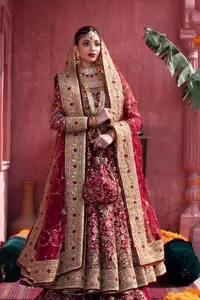
Deep Red Frock – Fish Cut Sharara – Dupatta
Sale! Original price was: £ 2,250.£ 1,350Current price is: £ 1,350. -
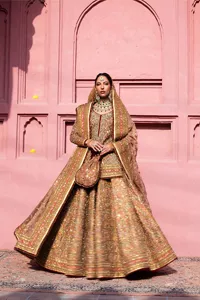
Soft Brown Short Shirt – Can-Can Lehenga n Dupatta
Sale! Original price was: £ 2,380.£ 1,428Current price is: £ 1,428. -
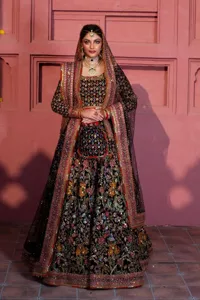
Jet Black Blouse – Flared Lehenga – Dupatta
Sale! Original price was: £ 2,110.£ 1,266Current price is: £ 1,266. -
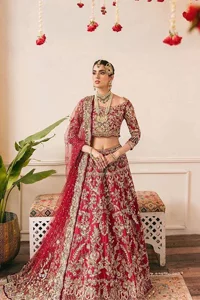
Dark Red Scalloped Blouse – Lehenga n Dupatta
Sale! Original price was: £ 2,250.£ 1,350Current price is: £ 1,350. -
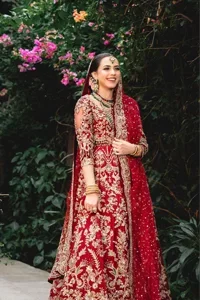
Deep Red Blouse – Flared Lehenga – Scalloped Dupatta
Sale! Original price was: £ 2,250.£ 1,350Current price is: £ 1,350. -
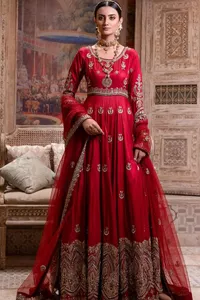
Deep Red Flared Pishwas – Lehenga n Dupatta
Sale! Original price was: £ 1,980.£ 1,188Current price is: £ 1,188. -
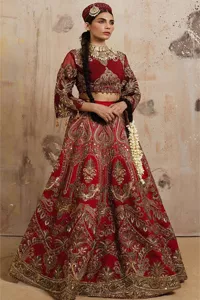
Deep Red Blouse – Flared Lehenga – Dark Blue Dupatta
Sale! Original price was: £ 2,250.£ 1,350Current price is: £ 1,350. -
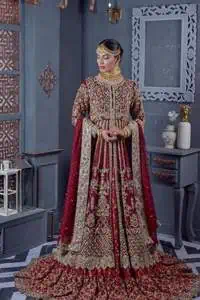
Maroon Scalloped Gown – Flared Lehenga n Dupatta
Sale! Original price was: £ 2,350.£ 1,410Current price is: £ 1,410. -
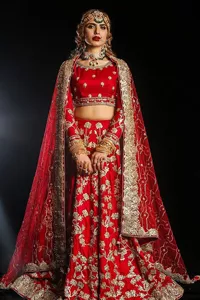
Wine Red Blouse Flared Lehenga – Dupatta
Sale! Original price was: £ 2,116.£ 1,270Current price is: £ 1,270. -
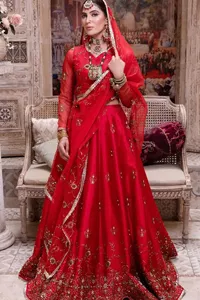
Red Blouse Flare Lehenga – Dupatta
Sale! Original price was: £ 1,090.£ 654Current price is: £ 654. -
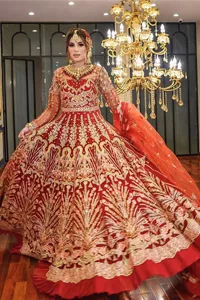
Deep Orange Frilled Heavy Maxi – Dupatta
Sale! Original price was: £ 2,350.£ 1,410Current price is: £ 1,410. -
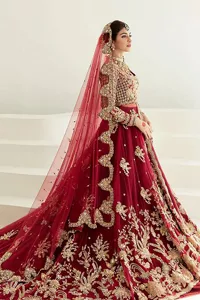
Bright Red Back Train Pishwas – Lehenga n Duaptta
Sale! Original price was: £ 2,350.£ 1,410Current price is: £ 1,410. -
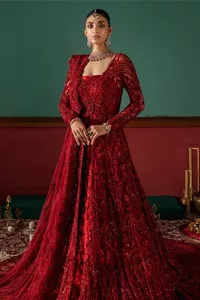
Deep Red Maxi – Back Train Lehenga – Scalloped Dupatta
Sale! Original price was: £ 2,350.£ 1,410Current price is: £ 1,410. -
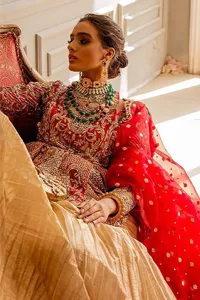
Bright Red Short Frock – Golden Crushed Lehenga
Sale! Original price was: £ 1,750.£ 1,050Current price is: £ 1,050.
What is the difference between a Baraat outfit and a Reception outfit?
The difference is purpose :- A Baraat outfit is designed for authority and endurance. It must maintain structure during movement, remain visually dominant in daylight or mixed lighting, and survive prolonged wear without distortion. This is why traditional Baraat dressing favours structured lehengas, reinforced hems, and embroidery that stabilises rather than weighs down the garment. The Reception outfit is engineered for sustained attention. Indoor lighting exposes fabric behaviour, silhouette balance, and movement quality. Here, excess weight works against the bride. Reflection, fluidity, and proportion take priority. When both outfits are designed with the same visual language, the sequence fails. The Reception should feel like a controlled release after the Baraat, not a continuation.How many outfit changes are realistic for London and Sheffield weddings?
Two major outfits across the First Day and Reception are standard for UK weddings. Adding more rarely improves impact and often increases physical and emotional strain. London weddings frequently operate on tight schedules. Delays caused by excessive outfit changes result in missed moments rather than added glamour. Sheffield weddings often extend longer, making comfort over time a critical factor. The objective is clarity. One outfit built for ceremony and stamina. One built for visibility and movement.How do you avoid both outfits looking too similar?
Similarity is not created by colour alone. It is created by repeating weight, silhouette, and embroidery scale. To maintain cohesion without repetition, only one element should carry across both outfits. A craft technique. A motif reference. A tonal undertone. Everything else must shift. Brides who are also planning a Nikah often struggle with overlap across events. Reviewing guidance on choosing your Custom Made Nikah Dress early helps prevent repetition in colour stories and symbolic details.Which fabrics are best suited for Reception wear in 2026?
Current UK bridal trends show a move away from dense velvet and overly stiff brocades for Reception wear. Brides are favouring silk organza blends, fine jamawar, and layered net constructions with internal support. These fabrics regulate temperature more effectively and respond better to artificial lighting. They shimmer subtly, rather than reflecting harshly. Tactile comfort matters. A Reception dress should feel cool, stable, and responsive during movement. If the fabric traps heat, it will trap fatigue.Which silhouettes allow movement without constant adjustment?
Basque waist lehengas and segmented panel skirts are gaining momentum in 2026 because they distribute weight across the hips instead of compressing the waist. Overextended flares create visual drama but fail during extended wear. Controlled circular skirts move with the body and return to shape without intervention. Sleeve construction has also evolved. Detachable sheer sleeves provide coverage when needed and freedom when the event transitions.How are outfit changes managed without missing key moments?
Rapid-change construction is no longer optional. Magnetic closures, zip-away overskirts, and per-structured dupatta systems are now integral to modern bridal design. Neckline planning reduces hair reset time. High collars support structured styles for the Baraat. Open necklines accommodate softer Reception styling without complete rework. Time saved here is time spent with guests.Is repeating colour across events acceptable?
Exact repetition weakens narrative. Tonal progression strengthens it. Moving from deep red to antique rose. From maroon to warm gold. From ivory with matte finishes to ivory with reflective detailing. These shifts preserve tradition while signalling transition. Family expectations often influence colour choices. The solution is variation in depth and texture, not confrontation.How should jewellery and accessories change?
Baraat jewellery anchors the look. Heavier surfaces. Broader forms. Pieces that read clearly in daylight. Reception jewellery refines the image. Fewer elements. Higher brilliance. Earrings and necklines that respond to motion and lighting rather than weight. Dupatta placement follows the same logic. Structured drapes for ceremony. Fluid placement for the Reception entrance.Can one outfit be adapted for both Baraat and Reception?
Only when designed intentionally:- Transformable garments now allow overskirts to detach, necklines to adjust, and dupattas to change scale. Retrofitting a heavy Baraat outfit for the Reception almost always fails. This modular approach is often chosen by brides balancing production timelines or budgets. Similar principles appear in our collection of Bridal Nikah Dresses, where elements are reused across events without visual redundancy.Addressing common bridal anxieties
| Anxiety | Design Resolution |
|---|---|
| Reception outfit feels underwhelming | Light-responsive fabrics and controlled silhouettes |
| Physical exhaustion | Balanced weight distribution and breathable textiles |
| Blending into guest attire | Scale contrast and dominant colour control |
| Outfit malfunction | Reinforced closures and internal grip systems |
| Budget pressure | Convertible garment design |
Why London and Sheffield require different design priorities
London weddings often operate under time pressure and controlled indoor environments. Precision in silhouette and fabric behaviour matters more than surface excess. Sheffield weddings frequently involve extended guest interaction and longer wear time. Here, comfort engineering and weight management become decisive. Ignoring these realities results in dresses that look impressive briefly and fail over time.The consultant close
Reception and Baraat outfits are not styled moments. They are production decisions. Each design secures time from cutters, embroiderers, and fit specialists. This is why planning the full wedding sequence early matters. Brides aligning multiple events often begin with Nikah wear for Plus Size Bride to ensure proportion, comfort, and symbolism remain consistent across ceremonies. The strongest bridal wardrobes are built as systems, not statements.Showing 1–40 of 281 resultsSorted by latest